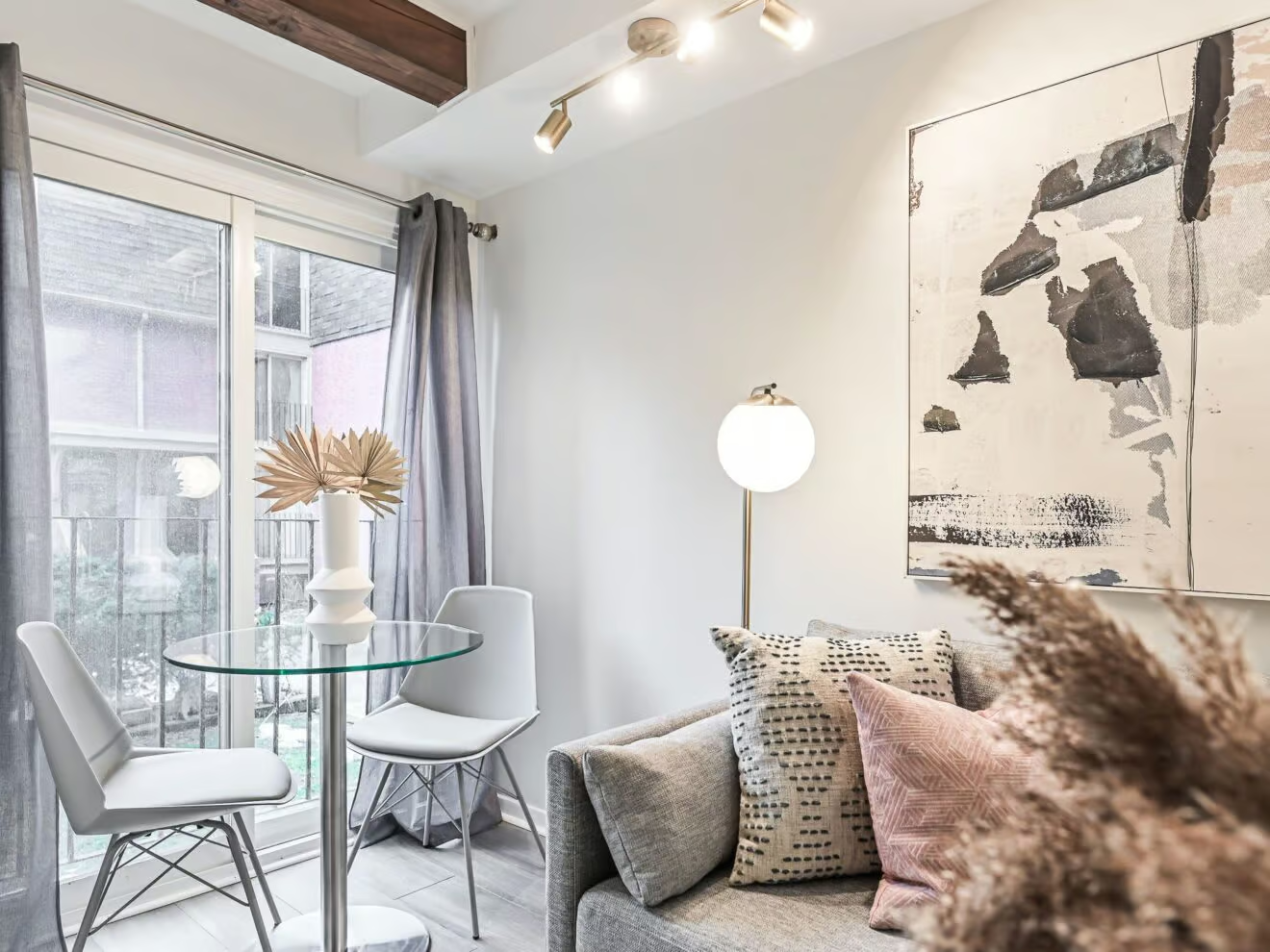



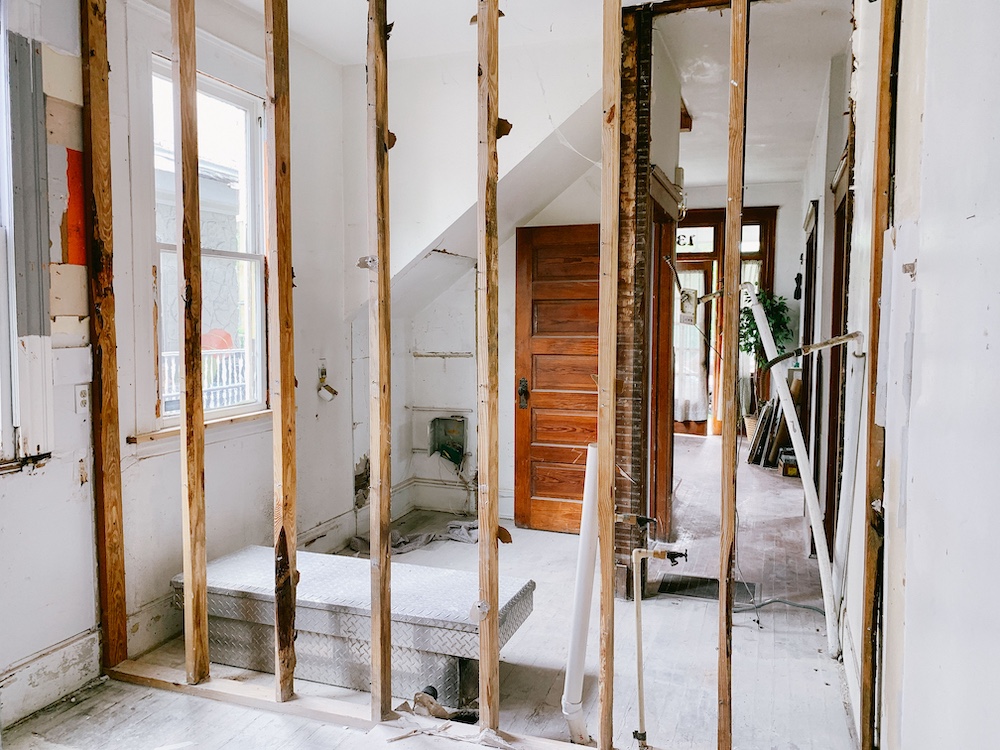
There comes a point in many homeowners’ lives when they look around their house and think: This isn’t working anymore.
Maybe the kitchen feels too small. Maybe two children sharing a bedroom was fine three years ago but decidedly less fine today. Maybe working from home has turned the dining room into an office, the basement into a playroom, and every available closet into overflow storage.
Whatever the reason, you’ve arrived at one of the more expensive questions in homeownership:
Should we renovate, or should we move?
It sounds like a real estate question, but it’s really a lifestyle question with a real estate component. And despite what a contractor, architect—or, for that matter, a real estate agent—might tell you, there isn’t one right answer.
The better choice depends on what you dislike about your current home, what can realistically be changed, what it will cost, and perhaps most importantly, what you’d be giving up if you left.
Did you know that Toronto Realty Group has experience helping our clients renovate their homes when selling? Download our free renovation guide to learn more.
Start With the One Thing You Can’t Renovate: Location
Before pricing out additions or scrolling through listings, ask yourself a simple question:
If your current house were exactly the way you wanted it, would you still want to live here?
If the answer is yes, renovation deserves serious consideration.
You can replace a kitchen. You can finish a basement, reconfigure a floor plan and, depending on the property, add another storey or build an addition.
What you can’t renovate is your neighbourhood.
You can’t move your house closer to your children’s school. You can’t shorten your commute by installing new countertops. And you certainly can’t renovate your neighbours.
For homeowners who love their street, their community, their schools and their routines, moving can solve the problems with the house while creating an entirely new set of problems outside it.
On the other hand, if you’re already compromising on location, a major renovation may simply mean investing more money into a property you ultimately don’t want to own.
That’s an important distinction.
Learn more about Toronto’s neighbourhoods with these posts next:
- East Side, Best Side? Or West is Best? What Toronto Home Buyers Need to Know
- What are the Best Neighbourhoods in Toronto?
What Problem Are You Actually Trying to Solve?
“ We need more space” is usually where the conversation begins, but it shouldn’t be where it ends.
What kind of space?
A family with three bedrooms and two children may technically have enough square footage, but if both parents now work from home, the problem might really be a lack of functional rooms.
Another homeowner might have 2,500 square feet but a terrible layout. In that case, moving walls could accomplish more than adding another 500 square feet.
Then there are problems renovation simply can’t solve particularly well.
A narrow lot will remain narrow. A house backing onto a busy road will still back onto a busy road. A property with limited parking isn’t necessarily going to accommodate a double garage. And transforming a modest bungalow into a 4,000-square-foot dream home may be technically possible while making absolutely no financial sense.
Before deciding whether to renovate or move, make a list of what is actually wrong with the current property.
Then divide it into two categories:
- Things renovation can fix.
- And things renovation can’t fix.
That exercise alone can make the decision considerably clearer.
Read more about home renovations and selling your home with these posts next:
- The Worst Renovations When Selling Your Home
- Best ROI Renovations When Selling Your Home
- How Toronto Realty Group Handles Home Renovations For Our Clients
Then Comes the Renovation Budget
This is usually where the renovation dream meets reality.
A cosmetic renovation and a major structural renovation are two very different propositions.
Replacing flooring, cabinetry and bathrooms can dramatically improve a home without changing its fundamental structure. But once you start discussing additions, underpinning basements, moving staircases or adding another storey, the scope—and cost—can escalate quickly.
And the quoted construction price is rarely the entire budget.
There may also be architectural drawings, engineering, permits, temporary accommodation, storage, landscaping and financing costs. Older Toronto homes also have an unfortunate habit of revealing surprises once somebody starts opening walls.
The prudent approach is therefore to budget for the renovation you expect—and maintain a meaningful contingency for the renovation you don’t.
If a contractor estimates $400,000, the decision shouldn’t simply be whether you’re comfortable spending $400,000.
The question should be whether you’re comfortable if the final number becomes $450,000 or $500,000.
Because it might.
Building a home can be a pricey endeavour. Learn more about building a home and new construction with these posts next:
- What is an Infill House?
- How Much Does it Cost to Build a House in Toronto?
- Buying from a Builder without a Realtor: Is it a Good Idea?
But Moving Isn’t Free Either
This is where the comparison gets interesting. Homeowners often look at the cost of renovating and compare it only to the difference between their current home and the next one.
Suppose your home is worth $1.5 million and the home you really want costs $2 million. At first glance, moving appears to cost $500,000, but that isn’t the entire calculation.
Depending on the circumstances, you may also have land transfer taxes, legal fees, moving expenses, mortgage costs and the eventual cost of selling your existing home. And in Toronto, land transfer tax deserves particular attention because buyers pay both the provincial and municipal tax. Suddenly, the financial gap between renovating and moving can become considerably narrower.
The right comparison is therefore not:
Renovation cost vs. price difference between two houses.
It is:
Total cost of renovating and staying vs. total cost of selling, buying and moving.
Those can produce very different answers and at the end of the day it is a deeply personal and property specific question you’ll need to answer for yourself. So I’ll leave you with this useful frame work to think about;
Renovating generally makes more sense when you love your location, the property’s fundamental characteristics are good, your problems can realistically be solved through construction, and you intend to stay long enough to enjoy the investment.
Moving generally makes more sense when the problems extend beyond the house itself, the renovation would require major structural work, you risk significantly over-improving the property, or another home can provide what you want at a comparable total cost.
If your home is no longer serving you and you’re thinking about selling, get in touch with Toronto Realty Group; we’d love to chat strategy! Get in touch by filling out the form on this page, or by calling us, or emailing us directly.


Ready to Get Started?
It all starts with a conversation. Whether buying or selling, TRG can help you achieve your real estate goals. Get in touch with our team today to start the process.