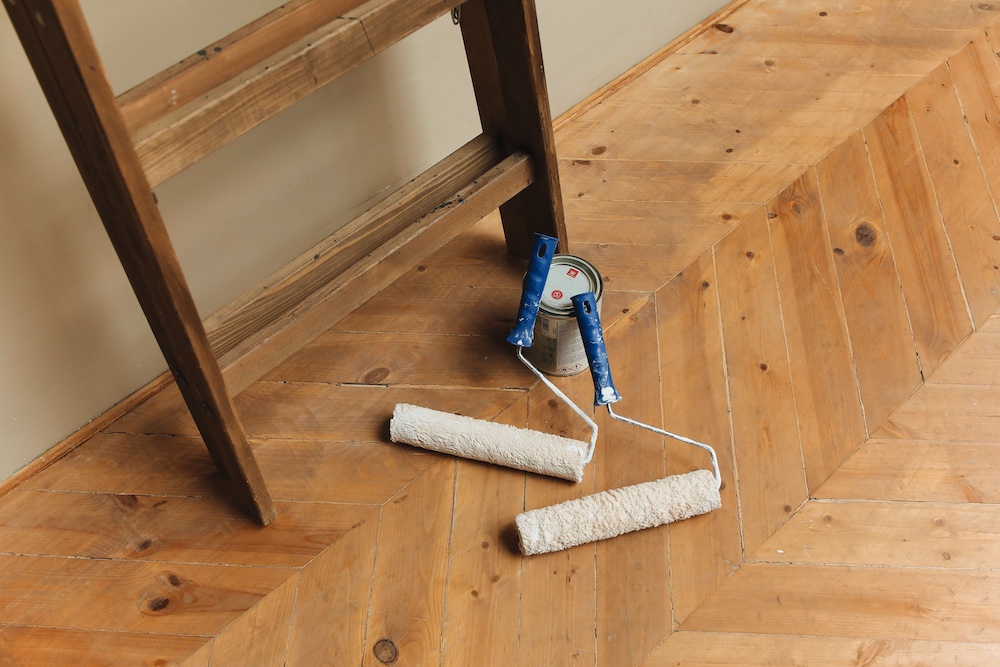




How often do you maintain your home?
That’s a loaded question, of course, since you first have to define what it means to “maintain” one’s home.
Does this involve fixing things that are broken? Are we talking about mowing the grass here, or something else?
Every homeowner will have a different way to describe “home maintenance,” and that’s exactly what makes maintaining a home so challenging. Because the truth is: an overwhelming majority of our clients perform less home maintenance than they should, and it always plays a role when it comes time to sell.
For more unfiltered real estate advice, news, and commentary, check out our podcast, The Last Honest Realtor.
A Real Life Example
Last year, I met clients of mine that had purchased their home about eight years prior. When I pulled into the driveway, they were sitting on the front porch and they waved at me. As I walked up the front steps, I put my hand on a post cap sitting on top of their railing, and the piece of wood came off in my hand!
I paused, smiled, and then remembered: this happened when we went for our last buyer visit eight years prior.
My clients smiled sheepishly and then said, “As you can tell, we’ve done nothing to this house in eight years!”
That loose post cap was present when they bought the home, and all it would have taken was a single nail to put it in place. But alas, “life happens,” and we all get busy.
There’s an adage about home maintenance that most of you aren’t going to like:
As a rule of thumb, you’re supposed to spend 1% of the home’s value, every year, in maintenance.
Raise your hand if you subscribe to this theory? I suspect there are very few hands raised.
But let’s put those numbers in perspective. If you own a $1,500,000 house in Toronto, that means you’d be spending $15,000 per year on maintenance. Is that even possible?
Window cleaning, eavestrough cleaning, landscaping, snow shoveling, fall cleanup – many homeowners tackle these jobs themselves, but some outsource. Does this count as “maintenance?”
Sure!
Before we dive in, here are a few more posts about selling your home that you might find useful!
- Why Properties That Look Amazing on MLS Haven’t Sold?
- Should Sellers Get a Pre-Listing Home Inspection?
- Best ROI Renovations When Selling Your House
The Three Types of Maintenance
Any money that you spend on your home is considered “maintenance” at some level, however, there are very different types of maintenance that one can undertake on their home. These different types of maintenance serve completely different purposes
Let’s break down maintenance into three categories:
- Preventative maintenance.
- Ongoing maintenance
- Restorative maintenance
Let’s look at each category and see if we can find everyday examples!
Preventative Maintenance
This is a type of maintenance that, as the title would suggest, is intended to prevent future problems. Preventative maintenance, ideally, would result in no need for ongoing maintenance or restorative maintenance.
For example, if you decided to re-grade your section of the driveway that runs between your home and your neighbours, in order to direct water away from the foundation.
This is preventative maintenance. It will prevent the need for the ongoing battle of keeping water from seeping into your basement, and hopefully, it will mean you’ll never have to do repairs to a wet basement down the line.
Much of preventative maintenance comes in the form of simple, everyday tasks that the weekend warrior can complete. Re-grouting the bathtub to ensure water doesn’t drip through the crack, and soak the drywall, for example. Or Re-caulking around a window sill to keep cold air from existing during the winter.
However, some preventative maintenance can be very costly, like digging along the side-walls of your house to install a weeping tile for your sump pump.
What happens if your home no longer suits your lifestyle? Keep reading to find out whether it’s better to renovate or move in this situation.
Ongoing Maintenance
We discussed property maintenance like landscaping, fall cleanup, eavestrough cleaning, and the like, and some of this falls into preventative maintenance as well. Clearing your eaves prevents a clog in the downspout, which prevents water from pooling on your roof.
And as with preventative maintenance, much of ongoing maintenance is easy and cost-effective.
Changing your furnace filter, cleaning your bathroom exhaust fans and laundry room lint traps, and replacing the batteries in your smoke detectors and carbon monoxide detectors, are a few examples.
But do you know which piece of ongoing maintenance is not only the easiest, but also the one that so few homeowners do?
Picking up the phone.
Okay, maybe you do this online, but booking a third party to inspect your furnace, air conditioner, or roof is an essential part of any home’s ongoing maintenance routine, and so few homeowners do it!
Most don’t want to spend the money, but the point here is to identify an issue before it arises and costs you more. You should have your systems inspected every year, without fail.
See how ongoing maintenance overlaps with preventative maintenance?
Consider home ownership a battle, if you can, for just a moment. You’re battling time, you’re battling, the elements and the seasons, and you’re battling obsolescence. Building materials, systems, and appliances break down over time, and our harsh Canadian winters certainly don’t help! No house is going to last forever if it’s not regularly maintained, and yet so few homeowners spend the necessary amount of time and money on their largest asset.
Here are a few more posts about preparing your home for sale:
- How to Prepare Your Home for a Fall Sale in The Summer
- What Not to Fix When Selling Your Home
- How to Stage Your Home For Sale
Restorative Maintenance
This is the last piece of the puzzle, and unfortunately, it’s the last resort for a homeowner.
Once a problem has taken place, restorative maintenance is enacted to fix it.
Sometimes, it’s a matter of replacing a worn-down roof, or installing a new furnace after the old one passes its life expectancy. This maintenance is a function of time more than anything else.
Other times, it’s cleaning up the basement flood after the sump pump failed, which always comes with that aching question:
“What could I have done to prevent this?”
How about a regular inspection of the sump pump? What about a backup battery? Or an alarm system that detects water
Restorative maintenance is usually the most costly form of home maintenance, and it’s often the most unfortunate.
Not every situation or catastrophe can be planned for.
An ice storm that knocks a tree branch through your sunroom ceiling isn’t something that happens all the time, and probably isn’t something you can plan for (although trimming overgrown tree branches does fall under “preventative maintenance”), but restorative maintenance is the type of expense that puts a major dent in your wallet, and causes the largest headache.
Did you know Toronto Realty Group helps seller clients with renovation projects? Download our Renovation Guide to see how we do it.
The Truth of it All
The truth is: home ownership is not for the faint of heart. It’s damn expensive! And there’s certainly a learning curve to be had.
Living in a condo does not prepare you for owning a home, especially in Toronto where our housing stock dates back to the late-1800’s.
A friend of mine once purchased an absolutely breathtaking Victorian era home, circa 1888, not too far from Trinity Bellwoods Park.
I told him, “Remember, owning a house of this vintage will come with a problem at some point, and it’s one that you’ll never see coming.”
Everything was fine for the first five years, and they didn’t seem to have so much as a bug flying into the front window.
But then one day, my friend heard what sounded like water running in the basement, and he went down to investigate.
What he found was a thick, steady stream literally pouring into his rec room from the front wall of the house.
The foundation of that home, which was built in the 1880’s, was made of rock. As in actual rocks! Stones, if you will, but not concrete, not cinderblocks, and nothing like you’d ever expect to find in a Toronto home.
It was only a matter of time before the pressure of all that water, seeping through the front lawn after a spring thaw, and pushing against the stone wall, was going to cause a failure.
Unfortunately, it happened during my friend’s time of ownership, and it took about four months to settle with the insurance company and have the basement restored.
Now, if you think that you can avoid this calamity by purchasing a new home, think again.
I purchased a new home in 2018 and didn’t expect it to need much maintenance, but in early 2020, my basement flooded after our sump pump failed.
Yessir, the example I gave in the previous section is one that I experienced first-hand!
And while all these stories are not meant to scare would-be homeowners, they are intended to explain a simple concept:
Home maintenance is an essential part of home ownership, and a part that you simply can’t opt out of.
No matter the age, size, style, or location of your home, you need to maintain it.
So remember: preventative maintenance, ongoing maintenance, and restorative maintenance.
Better safe than sorry, right?
Looking for Toronto home selling advice? Toronto Realty Group is here to help! Get in touch with us today by filling out the form on this page, calling us at 416.642.2660, or emailing us at admin@torontorealtygroup.com.


Ready to Get Started?
It all starts with a conversation. Whether buying or selling, TRG can help you achieve your real estate goals. Get in touch with our team today to start the process.