
When I first got into the real estate business in 2004, a contact of mine was building a house in Toronto’s east end.
He had purchased a bungalow for $206,000 and was going to “top it up,” as was the custom back then, adding a second storey to the home.
A mere four months later, the “new” house was complete.
He sold the house for $420,000 and made, what he called, a “juicy profit.”
Looking back at these numbers today, we can’t fathom how anybody could build a new house and come out with a profit. There’s a $214,000 delta between the purchase price and the sale price, and within that figure, we have to consider land transfer tax, legal fees, real estate fees, borrowing costs, and that’s before the cost of the build itself.
Was it possible that you could build a basic, average-quality “top-up” for $100,000 back then?
A lot has changed in over two decades, but one thing is certain:
The cost of building a new home in Toronto has never been higher.
Looking for real-world real estate advice? Listen to our podcast, The Last Honest Realtor, on our website or anywhere you get your podcasts.
I have countless stories like the one above, and they all increase in number as time goes on.
I remember working with a builder in 2005, bidding on Leaside bungalows for $450,000, looking to build a new home and sell it for (gasp!) $1,000,000 – what was a lot at the time. Working backwards, and accounting for profit, the assumption was that the house could be built for $400,000.
As I said: a lot changes in twenty years.
A colleague of mine purchased a building lot in late-2019 and had intended to build a home for his family in the New Year.
The quote he had received for the build at the time was just under $1,000,000. Then along came the COVID-19 pandemic, and those plans to build were put on hold.
When he finally got back on track in early-2022, the cost to build had risen to $1,200,000.
Whether you’re buying a home or selling in Toronto, here are a few more posts you might like to read next:
- Things that Fail a Home Inspection
- What Do Home Sellers Need to Disclose?
- What Does a Real Estate Brokerage Do?
He took his time, considered his options, and wondered whether or not he should build the house, or sell the lot to a builder, and buy a new-build elsewhere.
Fast-forward to 2025, and the cost of this build is now $1,500,000.
Factors that Affect the Cost of Building a New Home
For an end-user looking to build a new home in Toronto, there are several factors that will affect the cost of the build more than anything. To best understand these factors, I would offer the following questions to the prospective end-user:
1) Are you hiring a custom home builder?
Builders don’t work for free, nor should we expect them to. So if you’re looking at the cost to build a home as though you were doing it yourself, then you reach out to custom home builders to get quotes, don’t be surprised when the numbers don’t align.
Custom home builders will not take on a job if they’re not guaranteed a profit, so they’ll typically “mark up” the build cost and essentially run their numbers as though they were building a spec-home, and account for their profit.
In today’s market, custom home builders will typically look for a 15-30% markup on the build. So if your quote is for $1,200,000, it’s likely that the build costs $1,000,000, and the builder plans to come out with $200,000.
The alternative would be to manage your own build from start to finish, but unless you’re looking to quite your day job, I wouldn’t recommend it.
Looking for a new home in an established neighbourhood? An infill house might be the answer you’re looking for. Keep reading for everything you need to know about infill housing.
2) Is the custom home builder outsourcing design and architecture?
When developers build spec-homes, they’ll typically re-use blueprints from previous projects, or trade them with other developers. It’s a way to keep costs down and avoid having to “start from scratch” every time.
But if you’re building your own custom home, who’s drawing up the plans?
Once you get into higher-end properties in Toronto, you’re going to want a brand-name architect to design the home.
Why would anybody spend over a million dollars to build a house and balk at the idea of paying an architect $30-$50K to design the home?
The alternative is to have the custom home builder come up with the design, but I believe in specialization, so let the builder build, and let the designer design.
3) Are you going to Committee of Adjustment?
Without getting too technical here, consider that the existing bylaws in a given neighbourhood might not allow for the size or style of home that a user wants. As a result, an overwhelming majority of Torontonians looking to build new homes will have to make applications for “minor variances” in order to get what they want.
As a basic example, tearing down a bungalow and building a new home would mean building the new home on the same lot lines as the existing bungalow. But if you want a larger house, you’ll need to push the lot lines out further on both sides, and this requires a minor variance to be obtained.
The more variances you want, the more complicated the application, the longer it takes, and the more the neighbours might fight you on it. This means the costs could increase accordingly.
Calculating costs is an inherent part of both buying and selling real estate. When it comes to costs you should know, here are a few posts you might find helpful:
- What Buyers and Sellers Need to Know About Real Estate Fees in Toronto
- How Much Does a Home Inspection Cost?
- How Much Does it Cost to Own a Home in Toronto
4) Are you keeping the existing home and adding on? Or are you tearing down new – including the foundation?
Back in the 2000’s, it was very common to drive through a central Toronto neighbourhood and see an old home completely torn down except for the two side walls.
At the time, this was primarily done by builders because they could claim it was a “substantial renovation” and not a “new build,” and it affected their taxes accordingly.
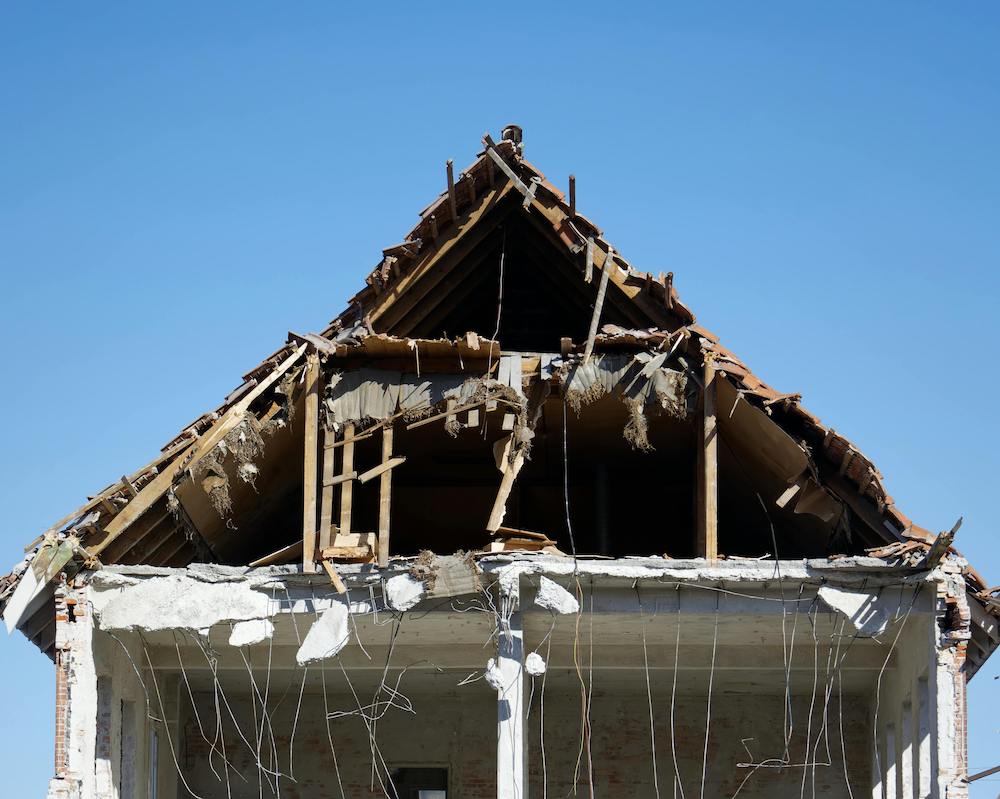
But it was also done, on occasion, to keep costs down. I mentioned above the concept of a “top-up,” which was a classic building style originating in the 1980’s. Picture an original bungalow with the roof ripped off, whereby the builder adds a second story, re-works the main floor layout to replace the bedrooms with a kitchen and family room, and voila! There’s a “new” home that incorporated a large portion of the original home, and removed significant costs in the process.
In today’s market, most end users want a brand-new home. More to the point, the cost savings associated with keeping the front façade and side walls have declined over the years, to the point that many end users decide not to bother.
Also consider that most original Toronto basements were 6-7 feet in height, and today’s end-users want 7-8 foot basements. The cost to underpin an existing foundation would exceed the cost to pour a new foundation, so again, why bother?
Is it a good idea to buy a teardown and rebuild from the ground up? Read our blog about the pros and cons of buying a Toronto teardown to find out.
5) Have you considered what’s outside the home itself?
Generally speaking, the cost to “build a new home” is for the home itself, and nothing more. So when you drive by a new home and marvel at the interlock-brick driveway with snow-melting system, the manicured front lawn, and landscaping that looks like something you’d find at a high-end golf course, consider that this work is always done after the house is built.
The problem in today’s market is that nobody wants to build a beautiful new home, sparing no expense in doing so, and then skimp out on the landscaping.
As a result, people drastically underestimate the overall, all-in cost to build a house, as they don’t consider how much money will be spent outside the house itself.
Answer those five questions before you even start to consider the cost to build itself, and you’ll thank yourself later.
The Number Crunching Continues
Every build is different, and the cost can fluctuate depending on the location, property size, style, and most importantly, tastes of the end-user.
The by-laws also differ dramatically by neighbourhood and affect what a property owner can build on a particular lot.
The “number crunching” on cost always starts with the lot size.
For a typical 30 x 120 foot lot (picture a bungalow being torn down), you’ve got a 3,600 square foot site that would allow 30% coverage, or 1,080 square feet per floor.
That’s a 2,160 square foot home, “above grade,” or 3,240 including basement.
If you went to the Committee of Adjustment, perhaps you get coverage of 0.33, which would allow 1,188 square feet per floor, so 2,376 above grade, or 3,564 including basement.
From there, we typically see people throw a “per square foot” estimate to build, and that number varies drastically!
The number is also, rather oddly, calculated based on above grade square footage, which isn’t to say that the basement doesn’t cost anything to build, but rather speaks to the cost to build the structure itself.
In our example above, at $500 per square foot to build, that “new home” on a 30 x 120 foot lot would cost $1,188,000 to build.
That’s what I would call an average cost to build a midtown Toronto home from scratch, but if you wanted to cut back on finishes, square footage, or unique features of the home, perhaps it could be done for $1,100,000 or even $1,000,000.
On the flip side, if you wanted top-of-the-line finishes throughout, it’s not inconceivable that the build cost could creep up to $1.3 – $1.4M.
When considering the cost to build a home in Toronto, there’s one more thing that is almost certain:
Prices are never going to come down.
The cost of materials and labour are not going to decline, nor will the availability of skilled workers be increasing any time soon.
So if you’re thinking, “Maybe it will cost less in a year if I wait,” you might want to reconsider.
If you have questions about buying, selling, investing, or relocating in Toronto, we’re here to help! Get in touch with the TRG team by filling out the form on this page, calling us at 416.642.2660, or emailing us directly at admin@torontorealtygroup.com.

Ready to Get Started?
It all starts with a conversation. Whether buying or selling, TRG can help you achieve your real estate goals. Get in touch with our team today to start the process.